Sewage Treatment Plant Process & Benefits | STP Manufacturers in India

Ever since you–ve wondered what happens to the water after you flush it down the drain or wash off your hands in the sink? Most people don–t consider it – but that used water doesn–t simply disappear. It turns into sewage: a blend of water, waste, and contaminants. And when it–s not treated as carefully, it can poison our rivers and damage the environment – or even threaten people–s health.
That–s where a Sewage Treatment Plant (STP) steps in. In basic terms, it–s a system that takes sewage water and cleans it up enough for reuse or dumping. So, if you are a residential society, commercial building or industrial premises owner/manager renting out space to multiple clients, then having a Sewage Treatment Plant is no longer an option; simply put, it–s compulsory.
What Is a Sewage Treatment Plant?
A sewage treatment plant is a piece of engineered equipment that tries to take harmful things, like organic matter, chemicals or disease-causing microbes, out of wastewater. It treats sewage and returns it to clean water (commonly known as STP water), which can be used for non-potable purposes such as gardening, toilet flushing or cooling towers, or safely released into the environment.
With ever increasing water scarcity and stringent laws, sewage wastewater treatment systems are now a necessity for housing societies, industries, hospitals and commercial complexes. They not only aid in adhering to pollution control board standards, but also save water and money in the long run.
How a Sewage Treatment Plant Works: Step-by-Step Process
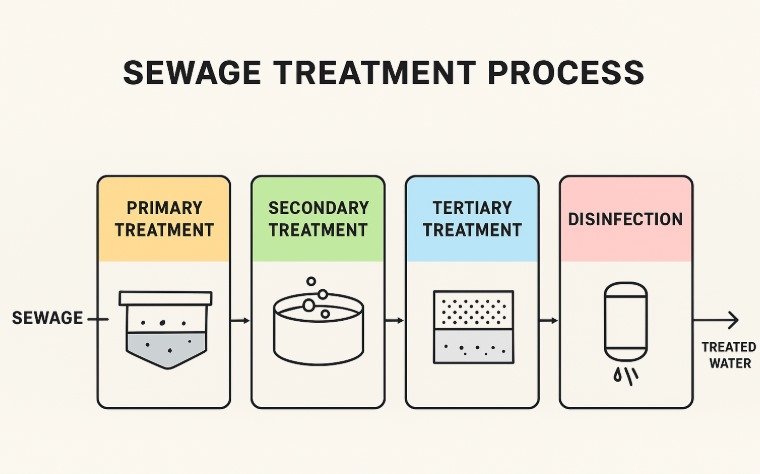
The sewage treatment plant procedure procedure procedure eliminates solids, organics and pathogens through several key stages:
- First Treatment – Getting Rid Of the Big Up front! New screens and grit chambers are used to take out large debris such as plastics, paper, or sand. This eliminates wear of pumps and downstream equipment.
- First Stage – Heavy Solids Settlement: The wastewater then moves to a sedimentation basin where heavier solids settle as sludge. Oils and grease float to the top and are skimmed off.
- Secondary Treatment – Biological Breakdown: The water moves to an aeration tank where microorganisms digest organic material. The mix is then clarified to separate sludge.
- Tertiary Treatment – Final Polishing: Advanced filtration, chlorination or UV disinfection removes remaining pathogens and impurities – resulting in clean STP water.
Main Stages of the Process
- Screening and grit removal
- Sedimentation
- Biological treatment
- Filtration and disinfection
In short: Screen – Settle – Treat – Disinfect.
Types of Sewage Treatment Plants
- ASP (Activated Sludge Process) : Conventional and best for high volumes.
- MBBR (Moving Bed Biofilm Reactor) : Compact, efficient, and space-saving.
- SBR (Sequencing Batch Reactor) : Processes wastewater in batches.
- MBR (Membrane Bioreactor) : Produces top-quality Class A reusable water.
The type of STP depends on project size, load, and water reuse goals – expert advice helps make the right choice.
Advantages of STP Water & Reuse
Treated sewage water is reused for:
- Gardening and landscaping
- Cooling towers
- Toilet flushing
- Construction and cleaning
This reduces water bills and conserves freshwater – small steps that make a big environmental impact.
How to Select the Right Sewage Treatment Plant Manufacturer in India
The right partner ensures system longevity. A reliable STP manufacturer in India provides:
- Properly sized system as per waste load
- Energy-efficient technology
- Compliance with local standards
- Easy installation and great after-sales service
Aquagreen Tech Solutions offers durable, efficient, and low-maintenance STPs for residential, commercial, and industrial uses – ensuring long-term savings.
Where Sewage Treatment Plants Are Used
- Residential apartments & housing societies
- Industrial plants & factories
- Hotels, hospitals & educational institutions
- Municipal wastewater facilities
Final Thoughts: Turn the Water Back to Work
Wastewater is water that shouldn–t go to waste. With a proper sewage treatment plant, you can turn a problem into an opportunity – saving natural resources and money.
Looking for reliable STP manufacturers in IndiaAquagreen Tech Solutions provides engineered systems with maximum performance and minimal maintenance. How to recycle your wastewater for reuse! Contact us today– and together we can create a cleaner, greener future.
Frequently Asked Questions
What is a sewage treatment plant and how does it function?
It removes contaminants from sewage through screening, sedimentation, biological treatment, and disinfection, making it safe for reuse or discharge.
What is STP water used for?
It–s used for gardening, flushing, and cooling towers – any non-potable purpose.
What are the primary stages in a Sewage Treatment Plant process?
Preliminary treatment, primary sedimentation, biological treatment, and tertiary disinfection.
Are STPs required by housing societies?
Yes. Most cities require STPs for apartment complexes to reuse wastewater.
Which is the best sewage treatment plant manufacturer in Pune?
Companies like Aquagreen Tech Solutions offer proven technology, compliance, and reliable after-sales service.