Primary Clarifier For Wastewater Treatment In India
Before wastewater ever gets to the biological treatment stage, it needs to shed most of what's weighing it down—grit, settleable solids, and floating material that would otherwise overload everything that comes after it. That's the job a primary clarifier quietly handles, mechanically, without needing any chemicals or biology to do it. Get this stage right, and the rest of the plant genuinely works better. At Aquagreen Tech Solutions, we build primary clarifiers to do exactly that, properly.
We manufacture and supply primary clarifiers for STPs and ETPs across India, working with industries, institutions, housing societies, and commercial setups that need dependable pretreatment before biological processes kick in. Every clarifier we deliver goes through our full project process—design & engineering, manufacturing & fabrication, installation & commissioning, testing & compliance support, and annual maintenance & after-sales service once it's actually part of your treatment train.
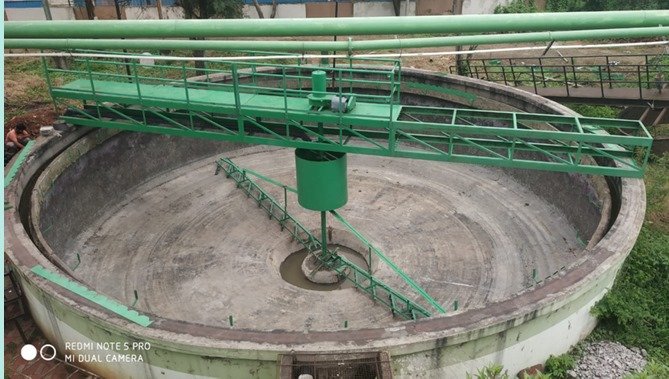
What is a Primary Clarifier?
A primary clarifier is basically a settling tank sitting at the front end of a wastewater treatment plant—right after screening and grit removal, but before biological treatment gets going. The idea behind it is pretty simple: let the heavier settleable solids sink to the bottom under gravity, while lighter stuff like oils, grease, and scum floats up to the surface, where it's skimmed off separately.
What collects at the bottom, known as primary sludge, gets drawn off for further handling, while the partially clarified water carries on toward biological treatment. By taking out a good chunk of the suspended solids and organic load before biological treatment even starts, a primary clarifier takes a lot of pressure off everything downstream, which helps the whole plant run more smoothly and dependably. Skip this stage or get the design wrong, and biological treatment ends up working far harder than it should have to—usually at the cost of how well the whole plant performs.
Comprehensive Primary Clarifier Solutions
Every clarifier we build starts with genuine design & engineering—we manufacture fabrication work out of detention time, surface loading rate, and influent characteristics specific to your site instead of just defaulting to a standard tank size. From there, our manufacturing & fabrication process uses corrosion-resistant materials, properly engineered sludge and scum removal mechanisms, and inlet-outlet arrangements that actually hold up, so the clarifier performs the way it's meant to under real, day-to-day operating conditions.
Growing Need for Primary Clarifiers Across India
As urban development picks up pace and industrial output grows across India, the volume and variability of wastewater hitting treatment plants have grown right along with it. Housing societies and townships need pretreatment that stops their biological systems from getting overwhelmed in the first place. And industries in sectors like food processing, textiles, and chemicals often have to deal with high solids or oil and grease content—levels that need bringing down before biological treatment even has a shot at working properly. And with pollution control boards pushing for steadier plant performance and lower sludge handling costs downstream, a primary clarifier that actually works has become a standard part of any well-thought-out treatment plant.
Primary Clarification Process
Wastewater makes its way into the primary clarifier after passing through screening and grit removal, and once it's inside, the flow slows down quite a bit, which is exactly what gives the heavier solids time to settle out under gravity. Down at the base, a slow-moving scraper works the settled sludge toward a central hopper, where it's drawn off for further handling. At the same time, up on the surface, a skimmer collects the floating oil, grease, and scum, making sure none of it slips through into the stages that follow. The partially clarified water then flows out and heads on to biological treatment.
Key Features of Our Primary Clarifier Systems
- Detention time and surface loading rates worked out around your specific influent characteristics
- Corrosion-resistant tank construction meant to hold up under continuous operation
- Sludge and scum removal mechanisms that don't need constant manual intervention
- Inlet and outlet zones designed to avoid short-circuiting and turbulence
- Sizes that scale from smaller STP applications up to large industrial ETPs
Benefits of Installing a Primary Clarifier
A properly designed primary clarifier cuts down the solids and organic load reaching your biological treatment stage, which means that stage can run more efficiently with a lot less strain on it. It also brings down sludge handling costs downstream, since primary sludge is genuinely easier and cheaper to manage than sludge generated later in the process. Beyond just efficiency, a clarifier that's actually working well protects your downstream equipment from excessive wear, lowers the risk of process upsets, and stretches out the working life of your entire treatment plant.
Our Services
- Installation & Commissioning – Our own engineering team handles the on-site setup, making sure the clarifier fits cleanly into your existing treatment train from day one.
- AMC – Annual Maintenance Contract – Regular servicing and preventive checks that keep your clarifier, and the rest of your plant, running at the efficiency it was built for, year after year.
- O&M—Operation & Process Maintenance—If you'd rather we stay hands-on day to day, we can manage plant operation directly for you.
- Consultancy Services – Whether it's process design or sludge management strategy, our team is there to help you work through the decisions that actually matter.
Why Choose Aquagreen Tech Solutions?
We build primary clarifiers the same way we build every other part of a treatment plant — around real site data, not a generic spec sheet. Every unit goes through proper testing & compliance support before we consider it done, checking settling performance and removal efficiency so what you get actually works the way it's meant to. And we don't step back once it's installed, either—our support team and annual maintenance & after-sales service stay involved, keeping your clarifier performing reliably and protecting the investment you've made in the rest of your plant.
Looking for a primary clarifier built around what your site actually needs? Take a look at our dedicated primary clarifier for wastewater treatment in Pune page for region-specific details, or just get in touch, and we'll talk through your plant's requirements.